 Vodafone · TelecomLive3 min read
One purchase flow inside Mi Vodafone
Six squads had built separate checkouts while customers experienced one Vodafone journey. During lockdown, I led the journey design and alignment for a shared modular architecture.
- Role
- Senior Product Designer
- Company
- Vodafone Spain
- Platform
- iOS, Android & Web
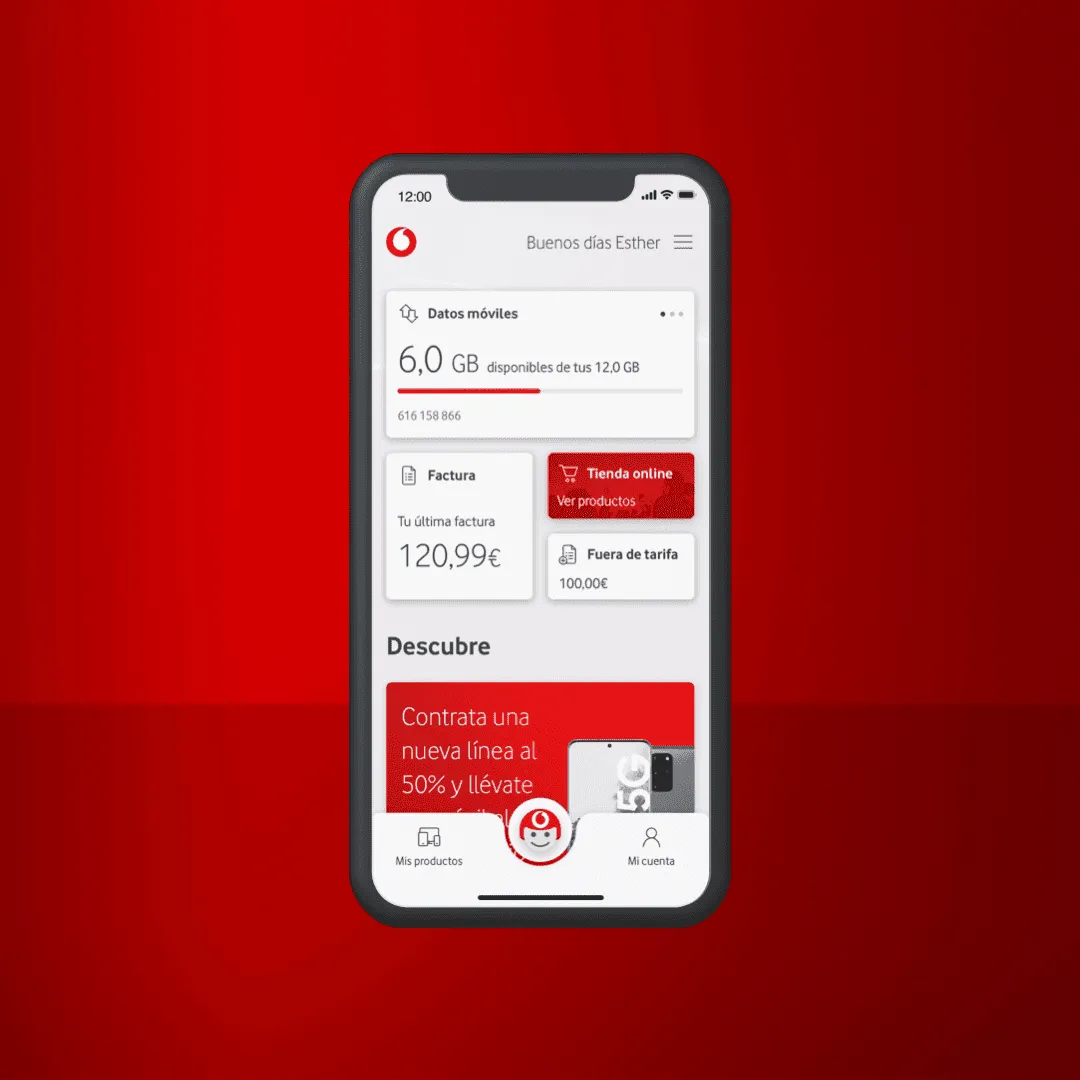
Six squad checkouts, one customer journey
I joined the TX Handsets squad within the Care Tribe of Mi Vodafone App as Spain entered COVID-19 lockdown. The brief asked for an in-app cross-selling and purchase flow with no store visits or redirects, plus an increase in average order value. We later received no average-order-value evidence, so I do not claim that outcome.
The existing purchase experience consisted of six squad-specific implementations for different sales scenarios. Customers did not see those ownership boundaries; they saw one fragmented journey. I led the end-to-end journey design and cross-squad alignment, while each squad stayed responsible for implementing its part within Vodafone's existing design system.
Alignment before the screens
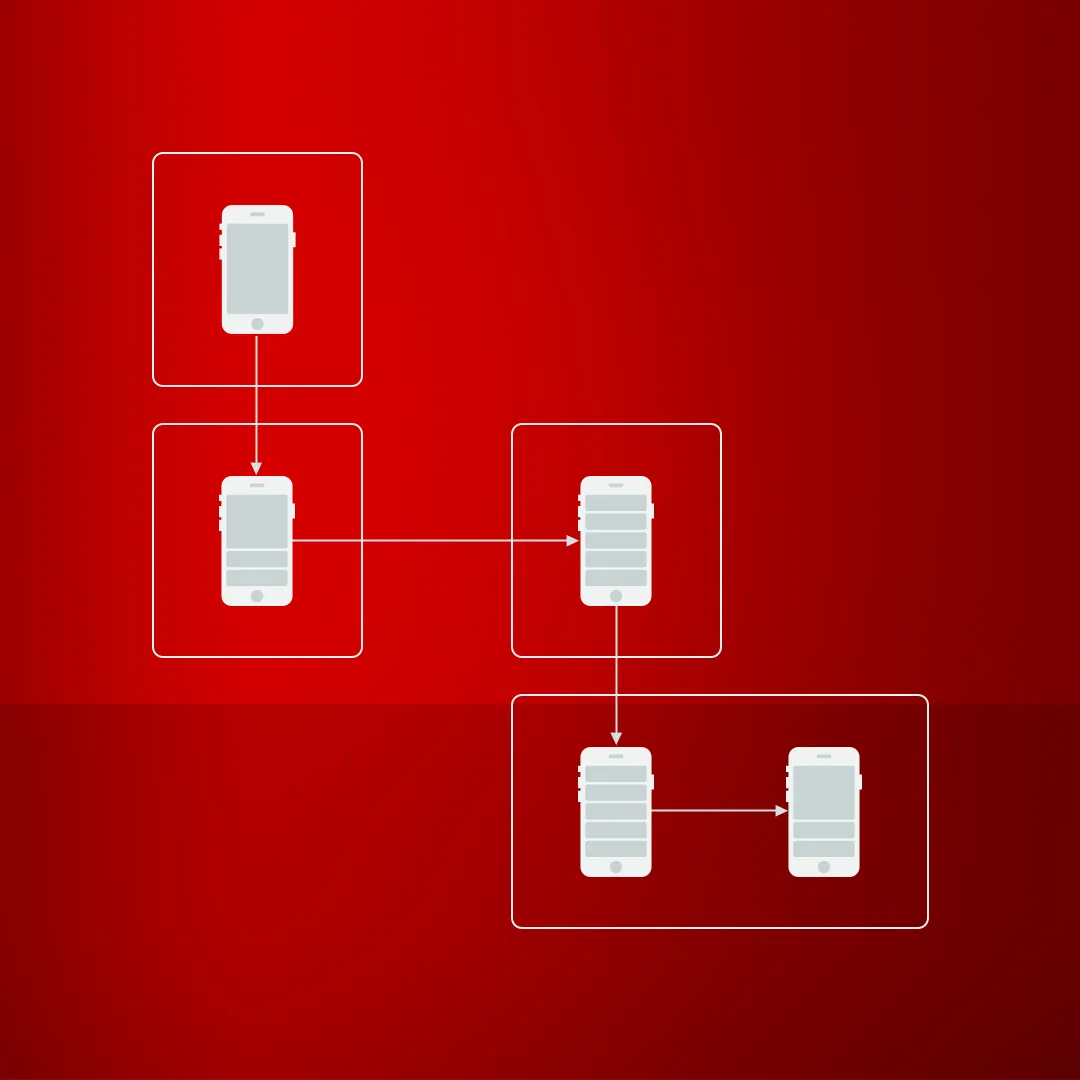
Before opening a design file, I ran alignment sessions with the Product Manager, Product Owner, Business Analyst, and Technical Leads. We mapped the existing constraints together because a large team with different assumptions about scope loses time correcting the wrong problems.
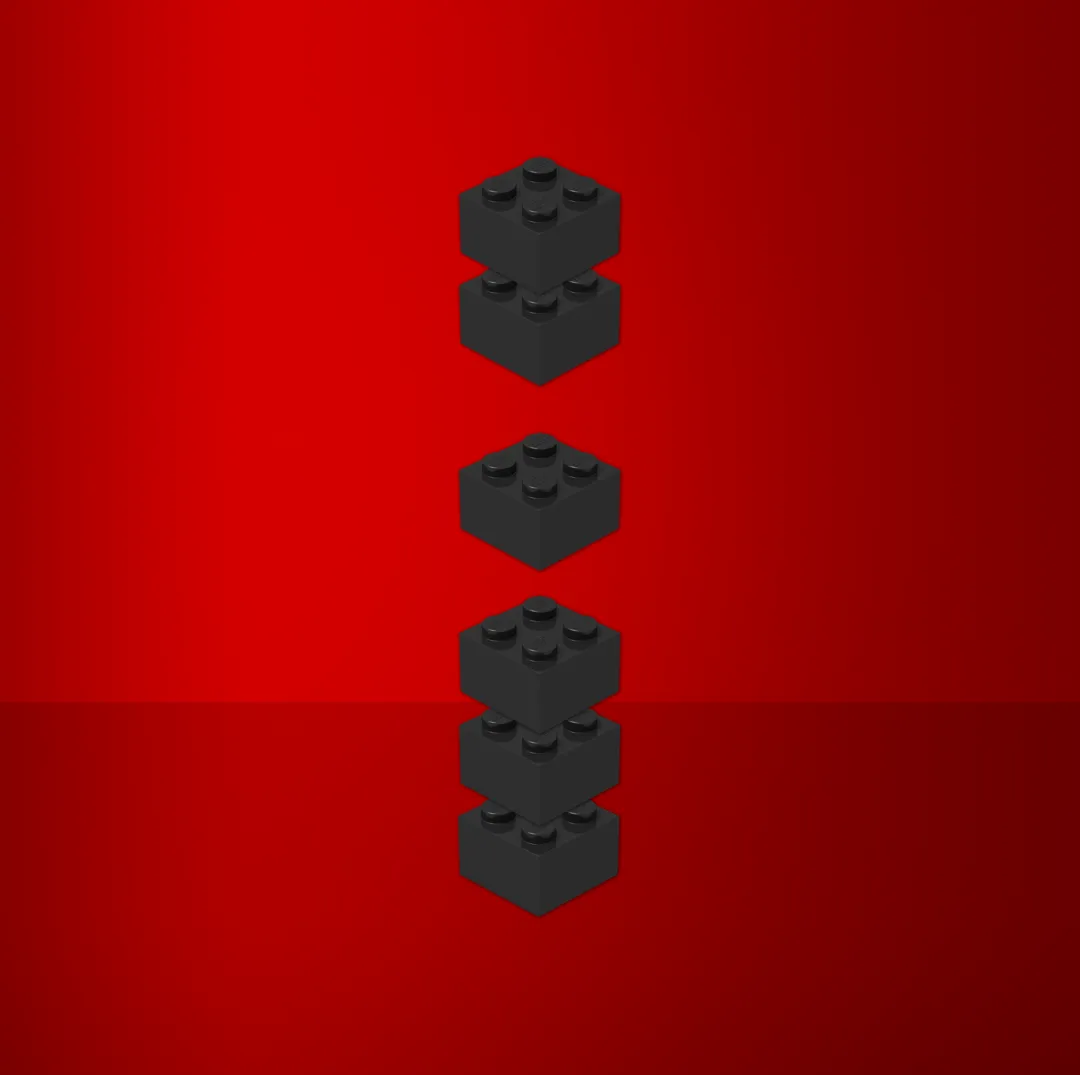
- Facilitated a Miro session to map current and future flows using a modular "Lego pieces" approach, treating each screen as a composable module and giving every stakeholder a shared mental model of the new architecture before design began.
- Built the first prototype in InVision, Vodafone's internal prototyping tool at the time, to test navigation logic before committing to visual design.
- Ran remote user testing with 10 existing Vodafone customers via Lookback.io, mixed ages and genders, all active in-app purchasers. This small, remote sample identified usability issues but could not establish behavior across Vodafone's customer base.
- Key insight from testing: users weren't confused by the new flow. They were confused by the lack of feedback between steps. We addressed this before a single line of production code was written.
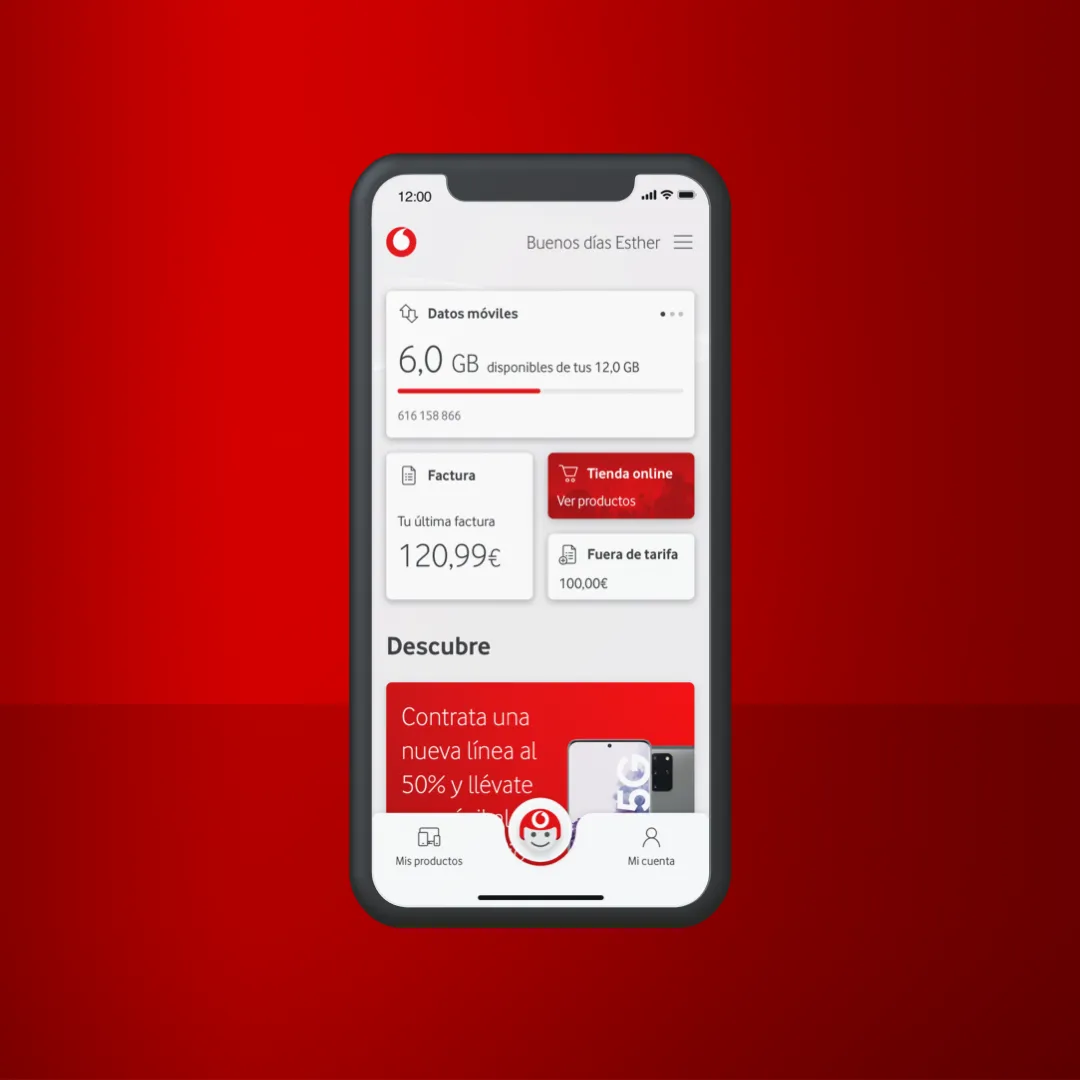
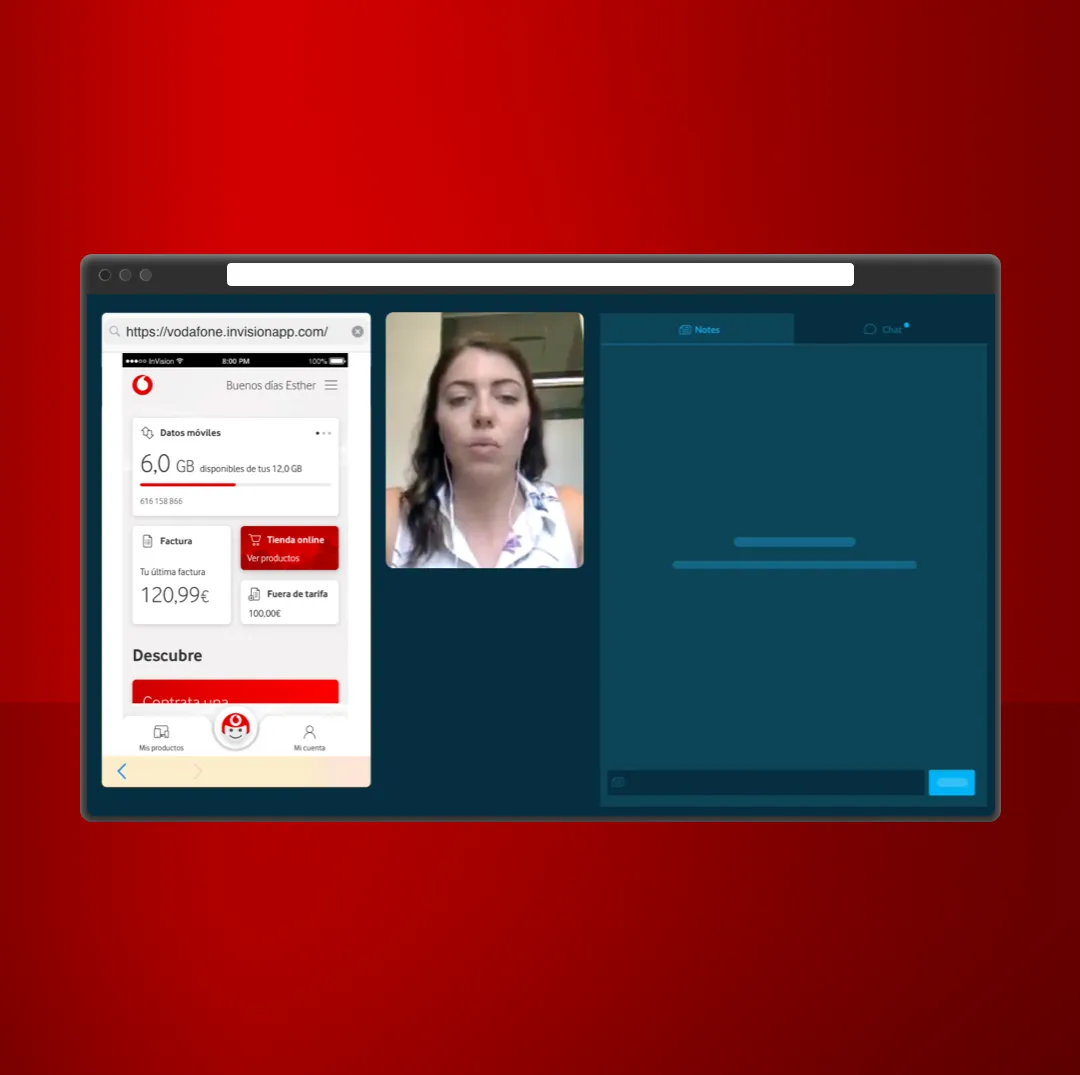
Six goals shaped the work.
- Create a clear cross-selling entry point that works for intent-driven and passive discovery
- Design a PLP → PDP flow that guides from browsing to configuration without dead ends
- Build a flexible Nexus screen, a cross-selling hub between offer and checkout, that adapts to the customer's existing products
- Unify checkout across every sales flow in the app. One architecture, not six.
- Maximum 4 steps to purchase, minimum 1. No asking for data already on file.
- Deliver entirely within Vodafone's existing design system, with no new components without justification
Two entry points, one checkout
Dual Entry Points
The Online Store supported customers who already knew what they wanted. The Discover section used personalised offers to give existing customers another route into the same purchase journey.
Nexus Screen
Nexus sat between the offer and checkout. Its modules changed according to the customer's existing products and eligibility, so the screen did not show options that were irrelevant to that customer.
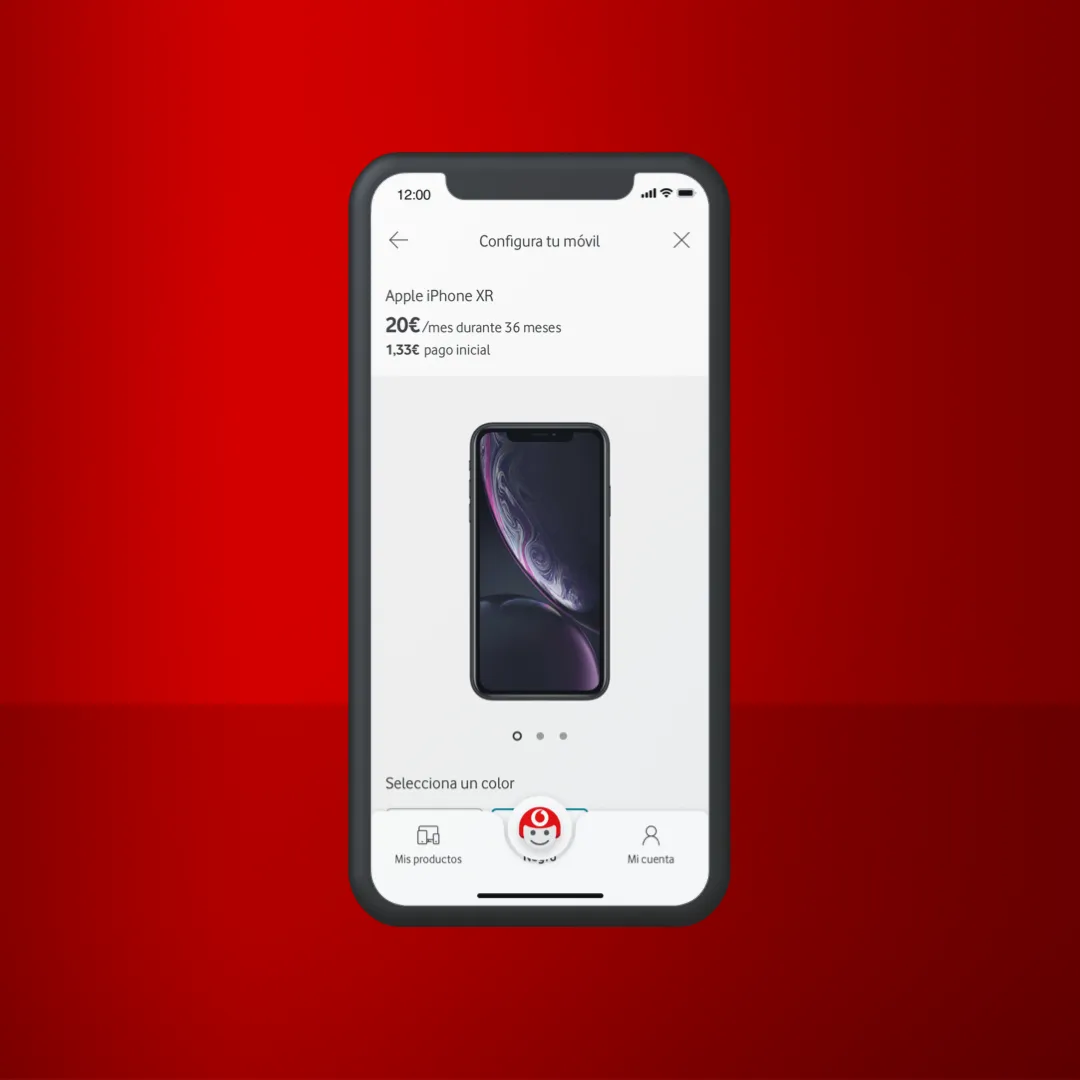
Configuration, association, and portability
After selecting a plan, customers needed to configure it by choosing a tariff, associating it to an existing number, or initiating a portability request from another carrier. These micro-flows had to feel lightweight without losing clarity.
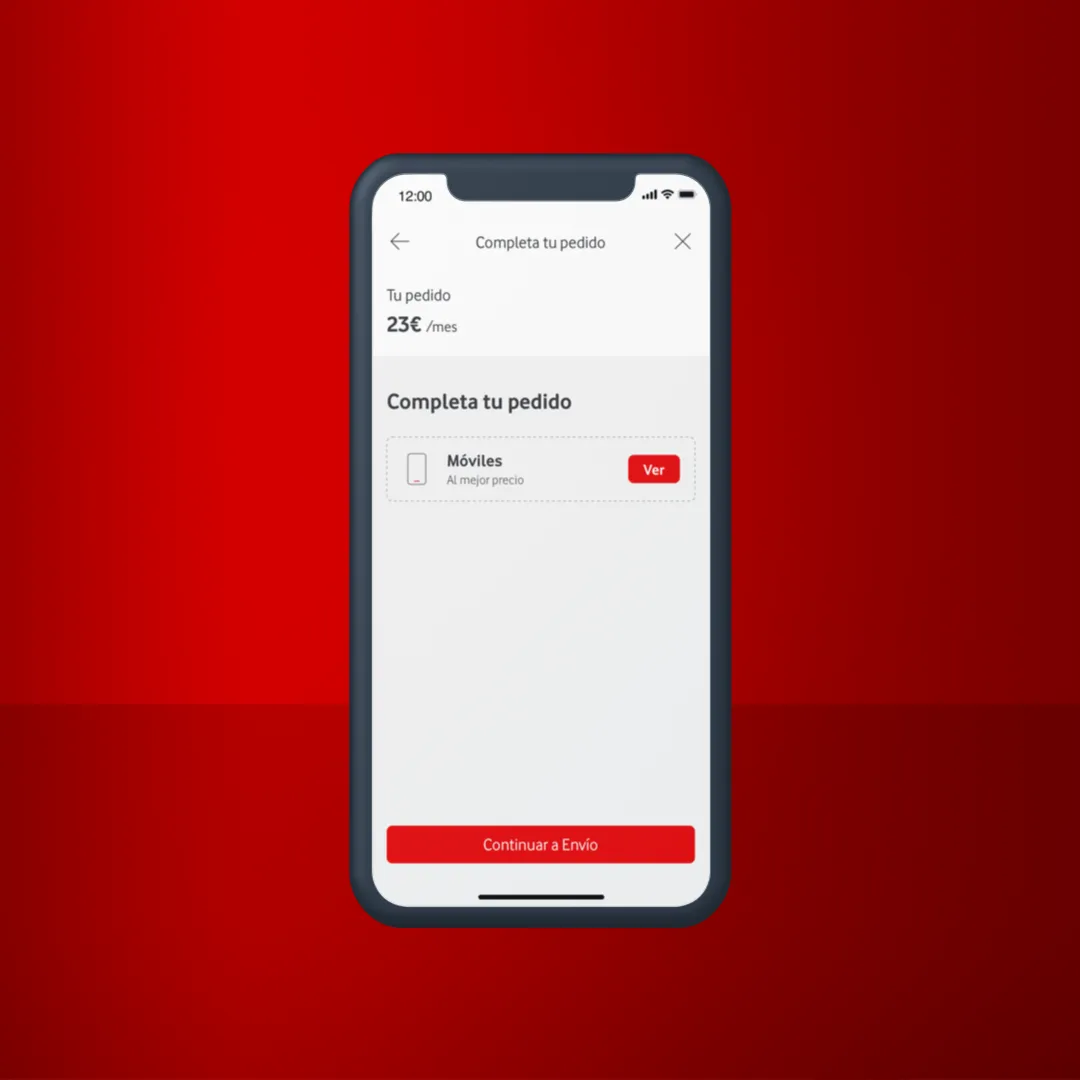
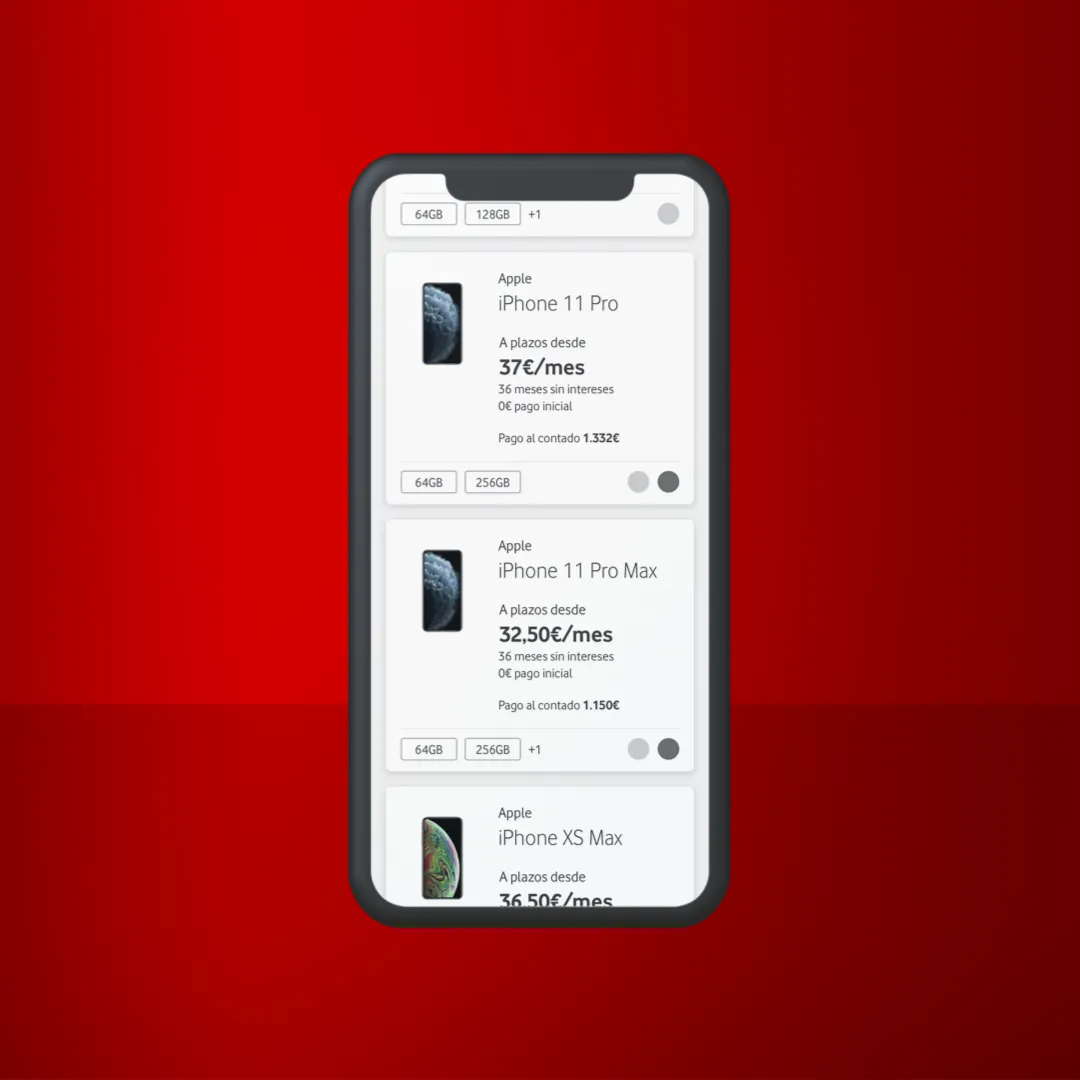
Between one and four steps
The unified checkout replaced a patchwork of flow-specific implementations across the app. A single architecture, adaptable by configuration, that handles any sales scenario: new line, upgrade, portability, or accessory add-on.
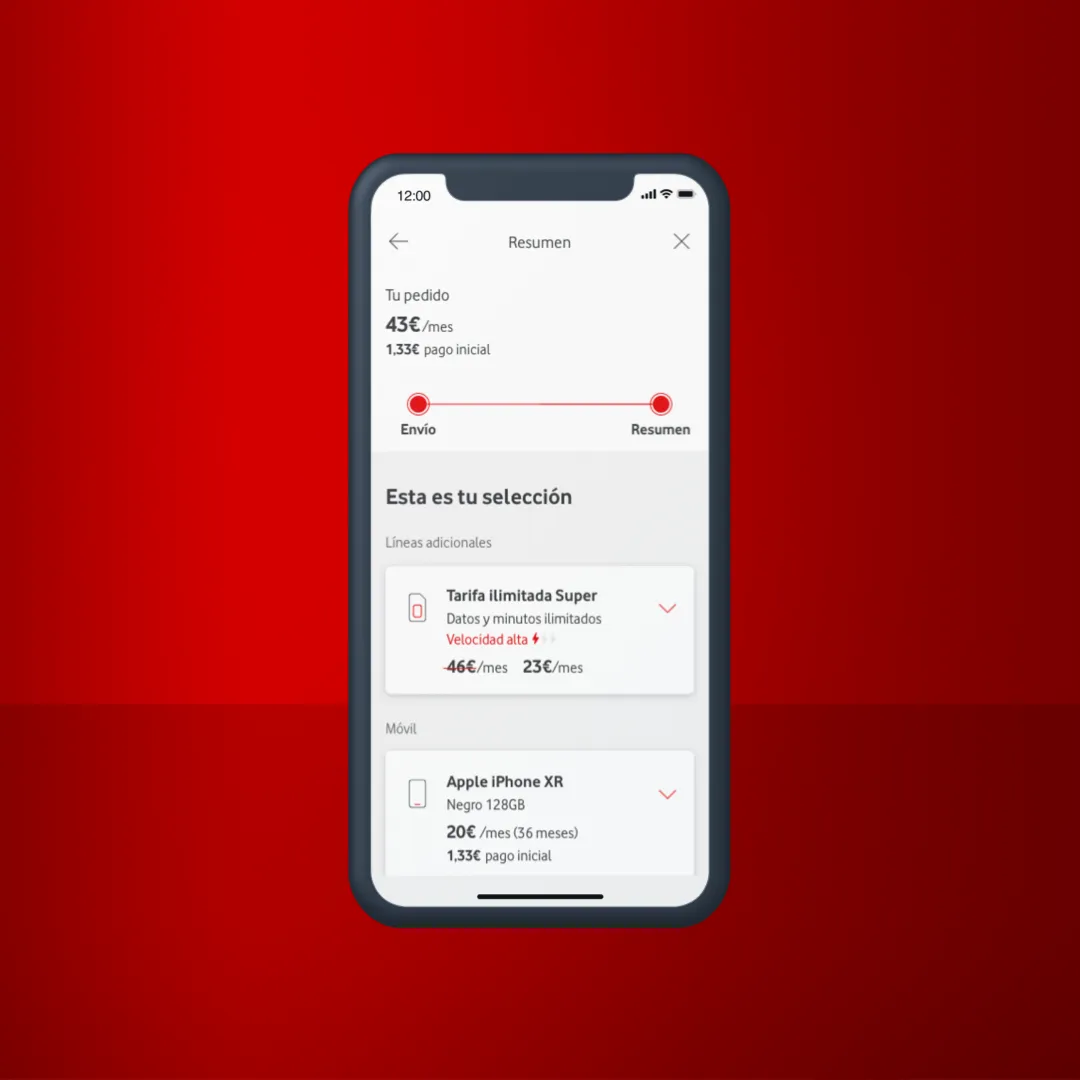
One journey, distributed ownership
Unifying checkout meant replacing six squad-specific implementations that had been built independently over years. Each squad owned their flow and had different assumptions about checkout behavior: different step counts, different data requirements, different error handling. Proposing a single shared architecture during full COVID-19 remote work meant coordinating across teams that had never aligned on a shared surface.
We used a "Lego pieces" framework in Miro (treating each screen as a composable module) so every squad could see how their flow mapped to the shared architecture. This created a shared language before any code was written. Some squads lost flexibility they had before. The trade was predictability: one checkout that could be tested, measured, and improved as a single system rather than six independent ones.
A shared architecture did not create shared delivery ownership. Clear boundaries mattered: I led the end-to-end journey and alignment, while squads implemented and maintained their scenarios. Making that split explicit reduced the risk of presenting coordinated work as one designer's execution.
Reported launch outcomes and evidence limits
Vodafone reported the conversion and step-count changes after launch. Mi Vodafone had 3M+ existing customers within reach of the redesigned experience; that figure does not mean all 3M used this flow. No average-order-value result was provided.
The hardest part was designing one customer journey across six teams without pretending ownership had become centralized. I led the end-to-end model and alignment; squads made implementation decisions within their systems. Ten remote participants helped us catch usability problems, but that sample did not predict launch performance. I would now secure agreed measurement access (including average order value) before using a commercial goal in the brief as a design success criterion.